


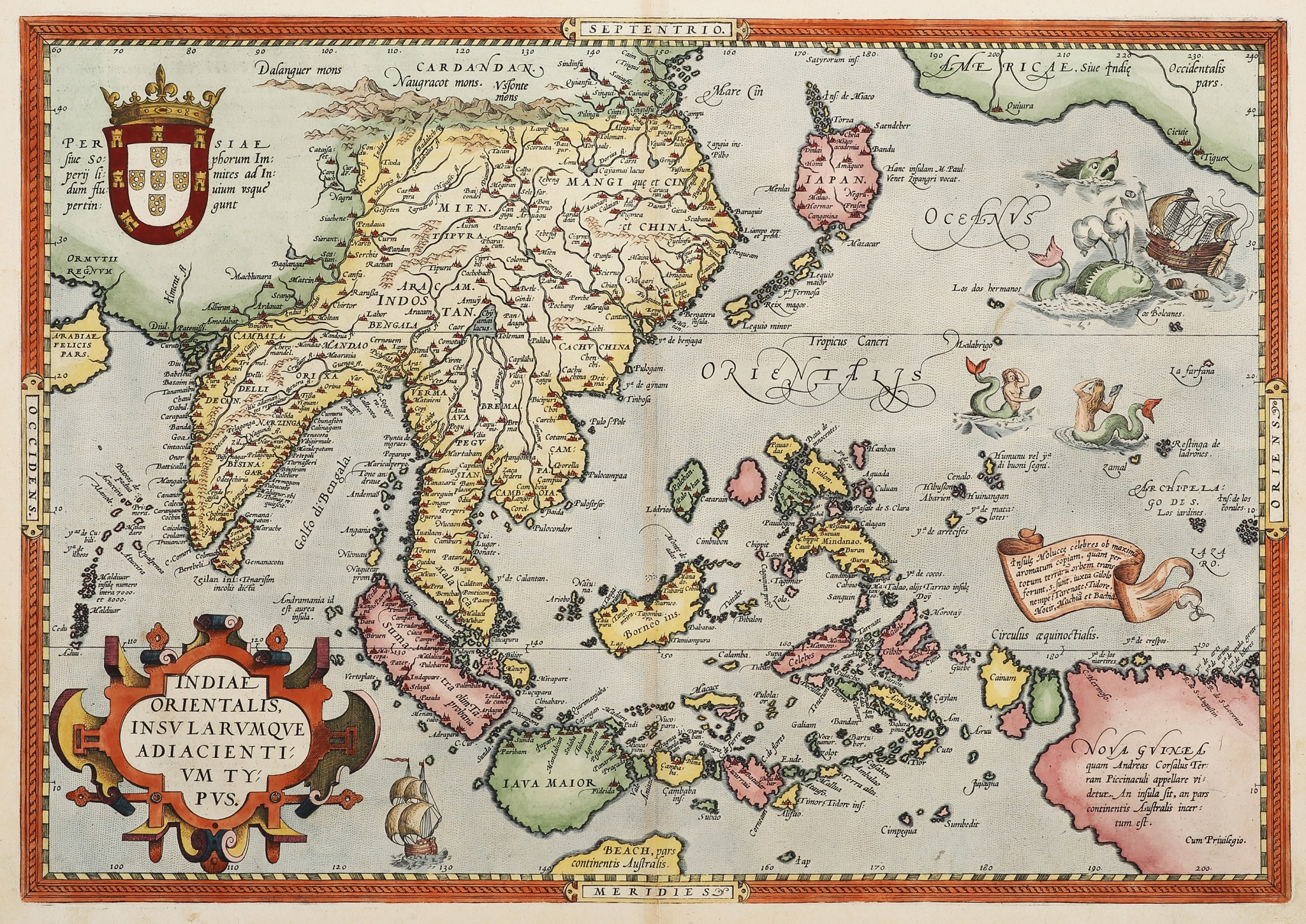


Abraham Ortelius: Creator of the First Modern Atlas
Abraham Ortelius (1527–1598) is celebrated as one of the most important figures in the history of cartography. A Flemish mapmaker, geographer, and dealer in prints, Ortelius revolutionised the way the world was visualised with the publication of his Theatrum Orbis Terrarum in 1570, regarded as the first modern atlas. His work transformed mapmaking from a craft of individual sheets into a comprehensive, systematic presentation of global geography.
Early Life and Career
Ortelius was born in Antwerp, then a flourishing centre of trade, learning, and printing in the Spanish Netherlands. Trained as a map illuminator and engraver, he began his career selling books, prints, and maps at fairs across Europe. This exposure gave him a wide knowledge of geographic sources and established contacts with other cartographers, notably Gerard Mercator, whose friendship and influence were decisive. Ortelius combined an entrepreneurial spirit with scholarly curiosity, collecting maps from across Europe and considering ways to standardise and harmonise them.
Theatrum Orbis Terrarum (1570)
In 1570 Ortelius issued the Theatrum Orbis Terrarum (“Theatre of the World”), a landmark in the history of cartography. Unlike earlier collections, which were often loosely assembled, Ortelius’s atlas offered a uniform set of maps printed to a consistent format, accompanied by explanatory text. The first edition contained 53 maps engraved by Frans Hogenberg, covering the known continents and major regions. Its success was immediate: new editions followed rapidly, translated into Latin, Dutch, French, German, Spanish, and Italian, making it one of the most widely circulated scientific works of its time.
Over the course of four decades, the Theatrum expanded to include more than 150 maps, drawn from the best sources available. Ortelius scrupulously credited his contributors in a section titled Catalogus Auctorum — an unprecedented bibliography of mapmakers. In this way, he acknowledged the collaborative nature of cartographic knowledge and preserved the names of more than eighty geographers whose work might otherwise have been lost.
Innovation and Vision
Ortelius’s atlas not only standardised cartographic presentation but also fostered a sense of global unity, showing the earth as a connected whole. His maps balanced geographic accuracy with rich decoration: allegorical figures, sea monsters, ships, and elaborate borders reflected the artistic tastes of the Renaissance while engaging the viewer’s imagination.
Ortelius was also intellectually adventurous. In his 1596 edition of the Theatrum, he speculated that the continents had once been joined and later drifted apart — an early anticipation of modern plate tectonics. Such ideas reveal his curiosity about natural processes and his willingness to move beyond received tradition.
Legacy
By the time of his death in 1598, Ortelius’s Theatrum Orbis Terrarum had established itself as the definitive atlas of its era. It influenced generations of mapmakers and set a template for the atlas as a genre, combining accuracy, accessibility, and visual splendour. Today, Ortelius is remembered not only as a skilled geographer but also as a cultural figure of the Renaissance, whose maps blended science, art, and humanist scholarship.
Through the Theatrum, Ortelius gave his contemporaries — and posterity — a new way to comprehend the world: orderly, unified, and profoundly imaginative.