Important c.18th half-length portrait of the Sydney Aboriginal known by the name of Musquito. This portrait, labeled “Y-erran-gou-la-ga” in the engraving, is believed to represent Musquito, a prominent Aboriginal figure. The original drawing, made by Nicholas-Martin Petit during the Baudin … Read Full Description
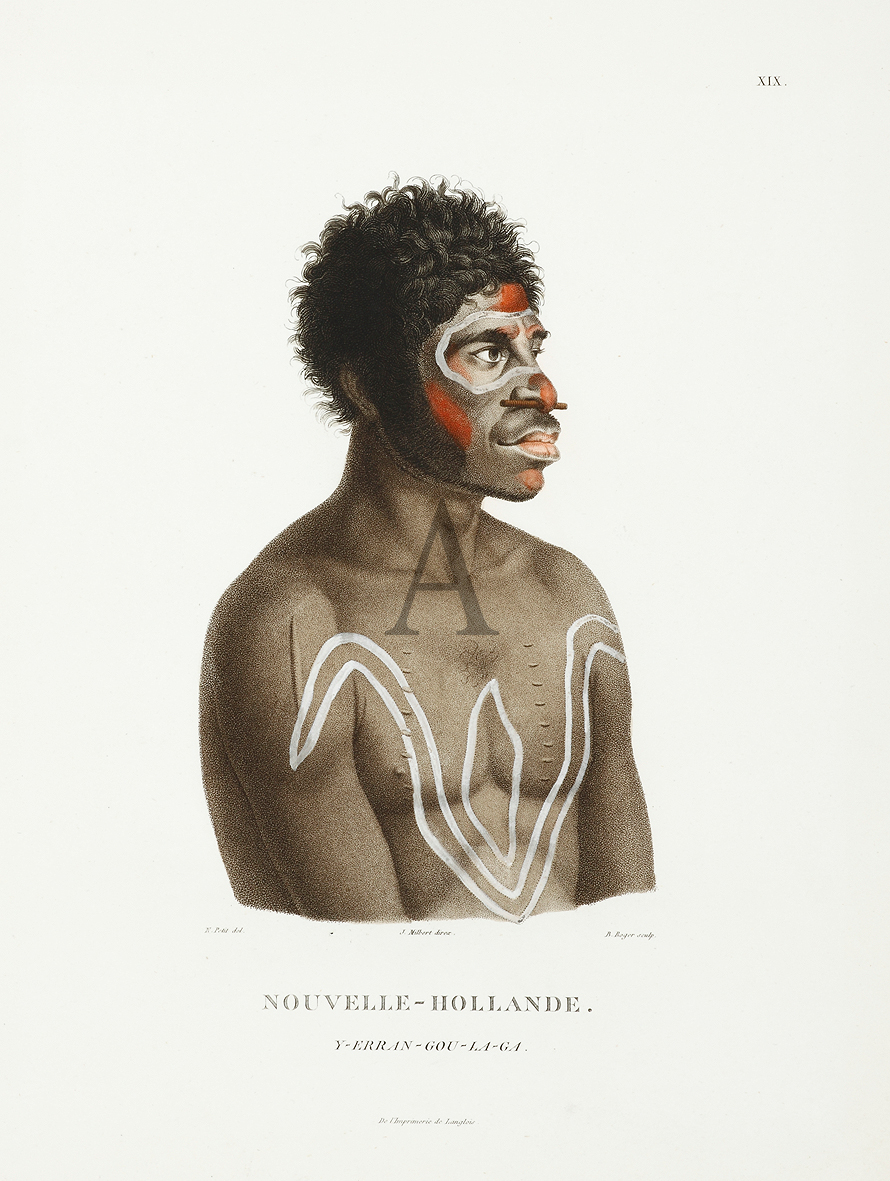
Important c.18th half-length portrait of the Sydney Aboriginal known by the name of Musquito.
This portrait, labeled “Y-erran-gou-la-ga” in the engraving, is believed to represent Musquito, a prominent Aboriginal figure. The original drawing, made by Nicholas-Martin Petit during the Baudin expedition’s stop in Sydney in 1802, identifies the subject as “Mousqueda,” known to the British as Musquito. However, historical records suggest ambiguity over which individual named Musquito the portrait depicts, as there were two men known by that name in Sydney during the early 19th century.
One candidate is the Guringai man Musquito (c. 1780–1825), infamous for his role in the Hawkesbury River raids of 1805 alongside his accomplice Bulldog. Following these raids, Musquito was exiled to Van Diemen’s Land (Tasmania) in 1813. Despite his official status as a free man, Musquito was not permitted to return to Sydney. His fluency in English and expert bushcraft skills made him invaluable as a tracker, aiding in the capture of escaped convicts, including the notorious bushranger Michael Howe in 1818. Frustrated by the continued denial of his return to his homeland, Musquito eventually joined forces with the Oyster Bay nation in their resistance against colonial violence. He was ultimately captured and executed.
However, some historians argue that this portrait might instead depict another Musquito, an associate of Bennelong who died in Sydney in February 1806. This uncertainty adds a layer of historical intrigue to Petit’s work, reflecting the complexities of colonial encounters and the multiple narratives surrounding Indigenous figures in early Australian history.
Francois Peron’s ‘Voyage de Decouvertes aux Terre d’Australes’.
Collections:
British Museum: 2016,2024.4 |
National Gallery Australia: Accession no NGA 2013.4131.20
National Gallery Victoria: Accession Number 2010.96.26
National Museum Australia: 1995.0006.0034
State Library NSW: a2478029 /MRB F81/11
Nicholas-Martin Petit (1777 - 1804)
French artist on the famous Baudin voyage of exploration and discovery. He had signed on to the voyage as a gunner's mate but was appointed as an artist, after the three appointed artists left the expedition at Mauritius.Petit had studied in David' studio at the Louvre and was to concentrate, 'all that which may be of interest for the history of man'. The results of his observations and drawings are series of 'impressive portraits of Tasmanian Aborigines' in the official published accounts of the voyage.
This voyage charted the Australian coast and visited Sydney in 1803.
Exchange rates are only indicative. All orders will be processed in Australian dollars. The actual amount charged may vary depending on the exchange rate and conversion fees applied by your credit card issuer.
Account Login
The List
Join our exclusive mailing list for first access to new acquisitions and special offers.