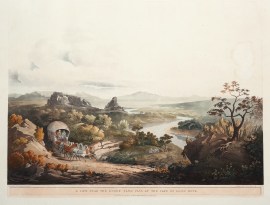
Artist, traveller, diplomat and collector of antiquities, was born in Lichfield, Staffordshire, 14 June 1780. He studied to become a portrait-painter, moving to London in 1797 where he became a pupil of Joseph Farington, R.A., and (in 1800) of John Hoppner, R.A. His career path was altered by his appointment as secretary and draughtsman to George, viscount Valentia (later Lord Mountnorris) who left London on 3 June 1802 on a tour of the East. Salt visited the Cape, then India. In Calcutta, the party was entertained by the Governor-General, Marquis Wellesley (the dedicatee of the present work) and then travelled to Benares, Lucknow, Ceylon and Madras. Salt then explored the Red Sea, returned to Bombay and Poona, to the Red Sea again, before making an extensive excursion into the Abyssinian highlands, here represented by six views. Salt returned to England on 26 October, 1806. He made many drawings, all of which remained the property of Lord Valentia, who also retained the ownership of the copper plates after Salt’s death. As is made clear by contemporary advertisements, the work was designed to be similar in size and presentation to the plates of Thomas and William Daniell’s great work, Oriental Scenery (1795-1808): the undoubted artistry of Salt and his engravers have ensured that this work is a worthy successor.