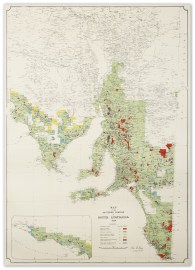
Surveyor born on 7 May 1866 at Forreston near Gumeracha, South Australia, to Edward Day, a storekeeper, and Mary Anne (née Wilkey). He attended Grote Street School and, at 16, joined the South Australian Survey Department as a chainman, later becoming a surveyor in 1893. His work included west coast surveys, vermin-proof fencing, and lecturing at the School of Mines. In 1905, he advised on Western Australia’s rabbit-proof fence project, influencing the Vermin Boards Act of 1908.
In 1911, Day became chief surveyor of the Northern Territory, investigating pastoral land potential. In 1915-16, he led arduous camel expeditions, mapping over 35,000 square miles and identifying valuable pastoral land. Later, he became head surveyor for the South Australian Irrigation Department and surveyor-general in 1921. A staunch advocate for a north-south railway, he chaired a royal commission on the pastoral industry, leading to reforms in the Pastoral Act of 1929.
Day retired in 1935 after a career marked by land reforms, surveying innovation, and photography. He passed away on 19 August 1943 at Clare, survived by his wife Emilie and their children. Mount Theo and Mount Day in the Northern Territory honour his legacy.