C1881

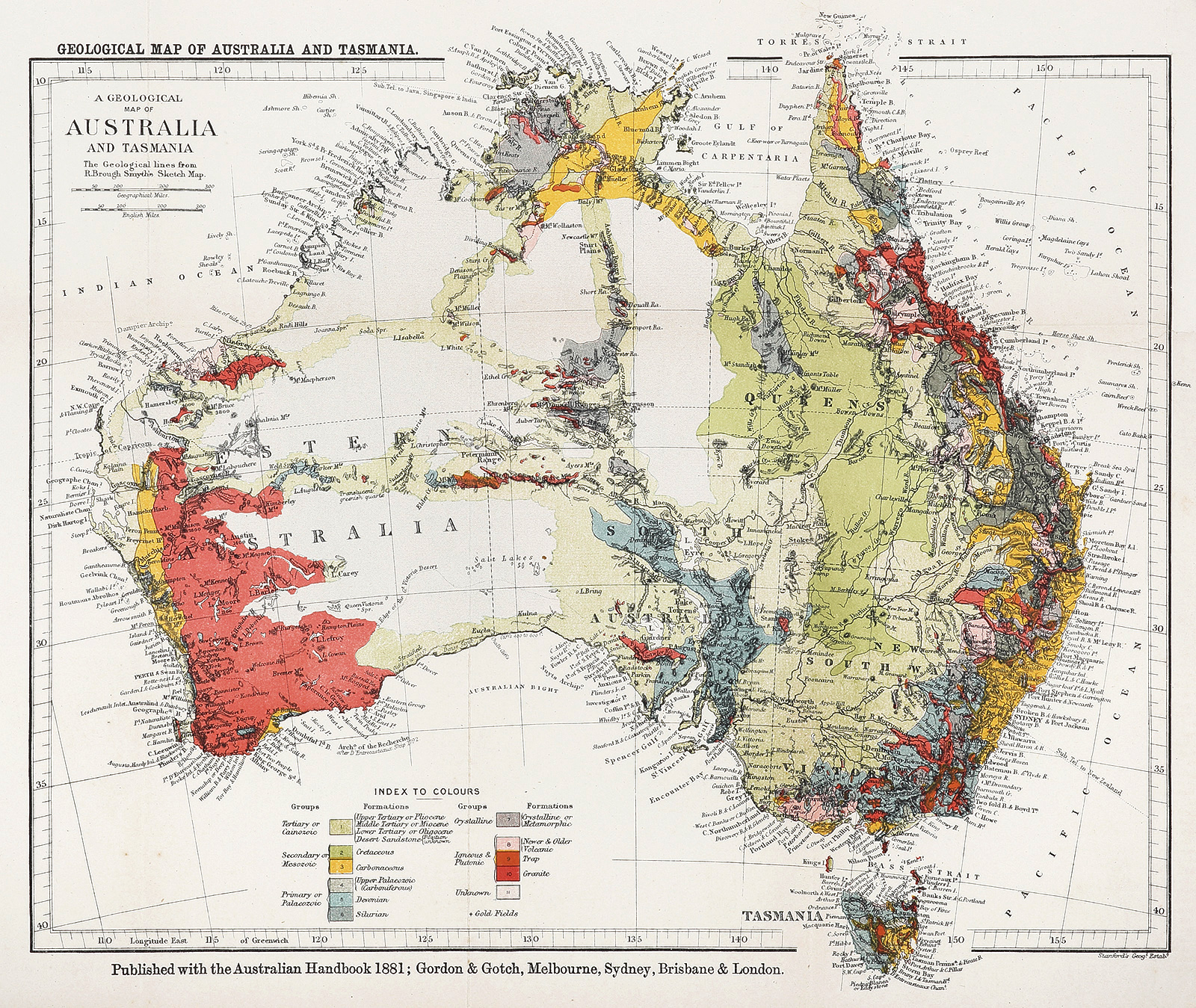
A Geological Map of Australia and Tasmania / The Geological lines from R. Brough Smyth’s Sketch Map.

Scarce and very detailed c.19th geological map of Australia with a colour key of formations at lower centre based on Robert Brough Smyth’s (1830-1889) map. Smyth was a civil servant and mining engineer and in 1860 became secretary for mines … Read Full Description

Sold

S/N: TAHB-AM-GEO-81998–468855
(C091)
Free Shipping
[MACLEAY RIVER] New Entrance to the Macleay River. [Southwest Rocks] New South Wales

Within Australia

All orders ship free
within Australia
[MACLEAY RIVER] New Entrance to the Macleay River. [Southwest Rocks] New South Wales

Rest of the World

Orders over A$300
ship free worldwide

See Shipping page for Terms & Conditions

Details

Full Title:

A Geological Map of Australia and Tasmania / The Geological lines from R. Brough Smyth’s Sketch Map.

Date:

C1881

Condition:

In good condition, with folds as issued.

Technique:

Colour printed engraving.

Image Size: 

322mm 
x 274mm

Paper Size: 

360mm 
x 288mm
AUTHENTICITY
A Geological Map of Australia and Tasmania / The Geological lines from R. Brough Smyth's Sketch Map. - Antique Map from 1881

Genuine antique
dated:

1881

Description:

Scarce and very detailed c.19th geological map of Australia with a colour key of formations at lower centre based on Robert Brough Smyth’s (1830-1889) map.

Smyth was a civil servant and mining engineer and in 1860 became secretary for mines at a salary of £750. His influence over official mining policy was unrivalled for more than a decade and he helped to standardize leasing regulations. In November 1869 he superintended the establishment of a museum of economic geology, mineralogy and mining and published in Melbourne The Gold Fields and Mineral Districts of Victoria … Covertly involved in the controversy that led to the disbanding of the Geological Survey in 1869, he became its director on its reinstatement in 1871; he increased its part in the search for and proving of economic mineral and coal deposits.

Edward Stanford (1827 - 1904)

Stanford was apprenticed as a printer and stationer he founded his business in partnership with Saunders in 1852 as "Saunders & Stanford" but it was dissolved in 1853. He then founded "Stanford's Geographical Establishment" 1857, employing Saunders and Alexander Keith Johnston to prepare maps. By 1864 he was employing twenty-eight men and thirteen boys. He acquired John Arrowsmith's stock at auction in 1874. By 1881 with his son Edward Standford II (1856-1917) acting as his assistant, his staff had grown to sixty-five men, nineteen boys and three women He retired in 1882 and his son took over. The firm still exists.

View other items by Edward Stanford

Choose currency

Exchange rates are only indicative. All orders will be processed in Australian dollars. The actual amount charged may vary depending on the exchange rate and conversion fees applied by your credit card issuer.

Account Login

The List

Join our exclusive mailing list for first access to new acquisitions and special offers.