C1850

A Sketch of the Physical Structure of Australia so…

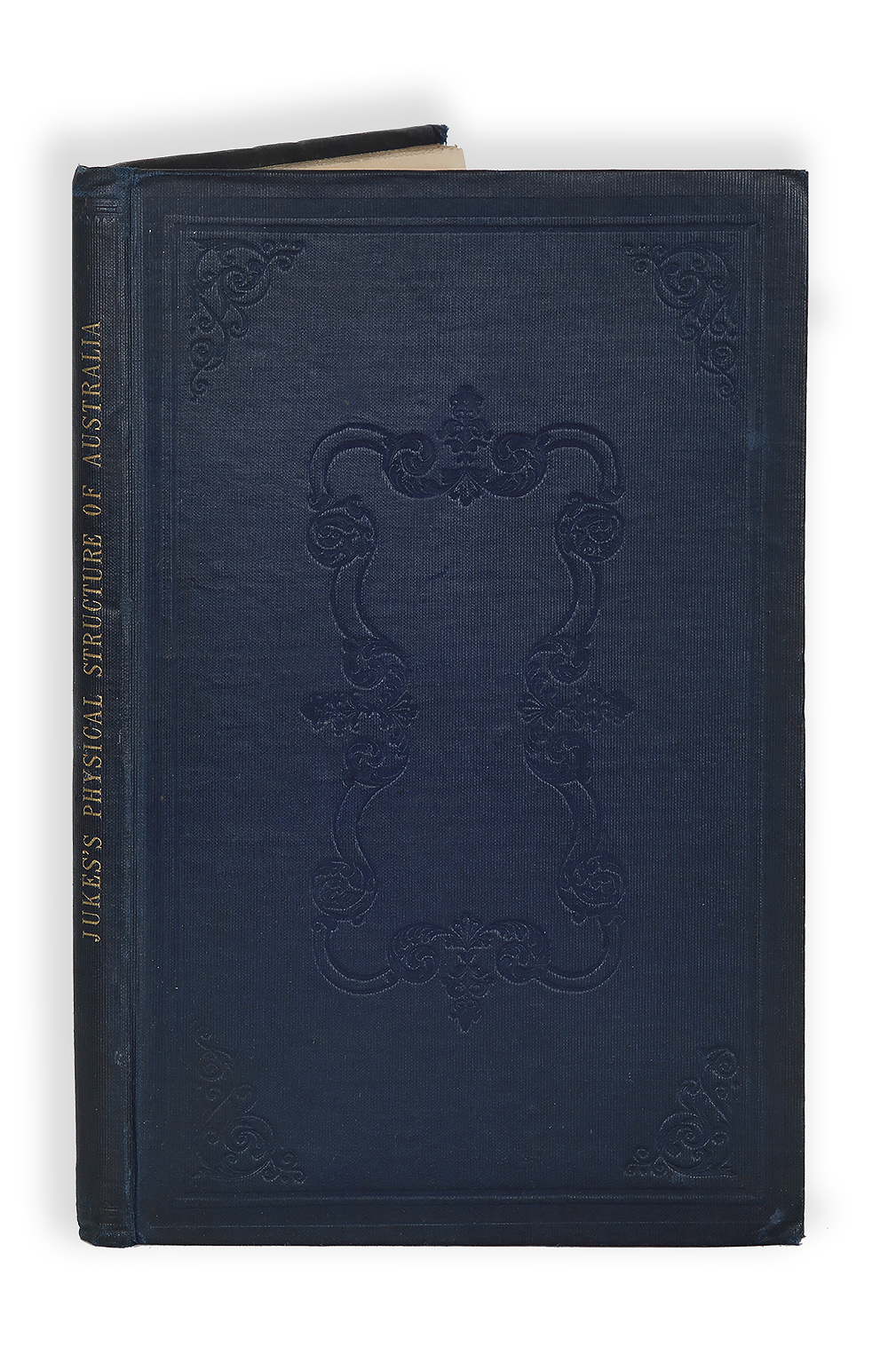
First edition, second state, of Juke’s important account on the geology of Australia published in 1850 which includes the first published geological map of Australia. Includes two maps: 1. Australia. John Arrowsmith dated 1st August 1846 2,  Chart of the … Read Full Description

Sold

S/N: BK-JUKES-SPSOA-1850–465044
(BC04)
Free Shipping
Mondu connu des Anciens WORLD

Within Australia

All orders ship freewithin Australia

Mondu connu des Anciens WORLD

Rest of the World

Orders over A$300
ship free worldwide

See Shipping page for Terms & Conditions

Details

Full Title:

A Sketch of the Physical Structure of Australia so far as it is at present known.

Date:

C1850

Condition:

In good condition.

Technique:

Blue embossed cloth with gilt title on spine

Image Size: 

145mm 
x 232mm

Paper Size: 

145mm 
x 232mm
AUTHENTICITY
A Sketch of the Physical Structure of Australia so far as it is at present known. - Antique Book from 1850

Genuine antique
dated:

1850

Description:

First edition, second state, of Juke’s important account on the geology of Australia published in 1850 which includes the first published geological map of Australia.

Includes two maps:
1. Australia. John Arrowsmith dated 1st August 1846
2,  Chart of the Northern Part of the Great Barrier Reef Including Torres Strait & ye. Adjacent Coast of New Guinea. John Dower. Undated.

This second state is identified by the lack of the 8-page catalogue of Boone’s publications entitled “Library of Australian Travels, &c., Published by T. and W. Boone” and the gilt title on the spine is lettered, Juke’s Physical Structure of Australia.” (first state: Physical Structure of Australia. J.B. Jukes.) Both states were issued bound in blue embossed cloth.

London : T. & W. Boone, 1850 95 pages, [2] folded leaves of plates : colour maps

A portrayal of the physical structure of Australia, titled “A Sketch of the Physical Structure of Australia,” is often regarded as Jukes’ most significant contribution to Australian geology. This work included the initial comprehensive map of the Australian continent, albeit imperfect. Jukes crafted the map through a compilation of extensive notes and personal observations, incorporating details on coastline structures, insights from visits to various colonies, and descriptions from other authors covering different regions of Australia.

Drawing from these diverse sources, Jukes outlined his interpretation of Australian geology. His depiction characterised Australia as a land of remarkable uniformity and monotony, emphasizing the continuity of mountain ranges and rock formations over vast stretches without notable variations or interruptions. Despite this apparent geological consistency, Jukes asserted that Australia’s soil and land were rich in minerals. In 1846, he recommended to the Tasmanian Society the importance of conducting additional geological surveys in New South Wales and Van Diemen’s Land to further explore the mineral wealth of these regions.

Jukes gained recognition from notable figures such as Sir Paul Edmund de Strzelecki (commonly known as “Count Strzelecki”) and William Branwhite Clarke. He supported Clarke’s conclusions regarding the Palaeozoic age of Australian coal. Jukes’ work played a pivotal role in providing early insights into the nature of Australian geology, a time when knowledge about the continent was limited, and English interest was focused on acquiring the geological understanding that Jukes was able to unveil.

References:
Ferguson, J. A. Bibliography of Australia Volumes 1-8, Canberra 1976 :: 5406.
Wantrup, J. Australian Rare Books. Sydney, 2nd ed. 2023:: p.216-217, 94.


Collections:
National Library Australia: Bib ID: 176168
State Library New South Wales: MMS ID 991012434139702626
State Library Victoria: RARELT 559.4 J53
State Library South Australia: 559.4 J93

Joseph Beete Jukes (1811 - 1869)

Geologist and naturalist who visited Australia in the 1840s as a member of the scientific complement on board H.M.S. Fly. His fellow naturalist on board was John MacGillivray. Francis Blackwood, in command of Fly, had orders to survey of a safe passage through the Great Barrier Reef. Much of the Reef was charted, as were parts of the southeast coast of New Guinea. Jukes, an astute observer, published his Narrative of the surveying voyage of H.M.S. Fly, in 1846: the chapter on the Reef is considered an early classic in Australian geology. His other significant contributions in this field include A sketch of the physical structure of Australia (1850). While in Sydney during the voyage, Jukes made geological forays into the country surrounding Sydney with William Branwhite Clarke, later lending support to Clarke's conclusions as to the age of Australia's coal fields. On returning to the United Kingdom, Jukes was a surveyor with the Geological Survey of Great Britain before holding office for 19 years as director of the Geological Survey of Ireland.

View other items by Joseph Beete Jukes

Related Products

Choose currency

Exchange rates are only indicative. All orders will be processed in Australian dollars. The actual amount charged may vary depending on the exchange rate and conversion fees applied by your credit card issuer.

Account Login

The List

Join our exclusive mailing list for first access to new acquisitions and special offers.