William Glover Webb Freeman (1809 - 1895)
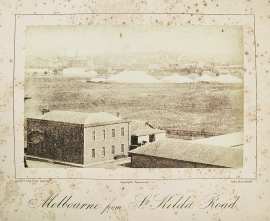
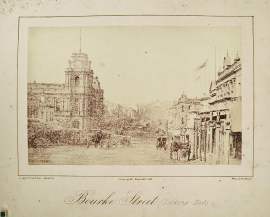
Was a colonial photographer who with his brother had five years' experience in London as professional photographers before William with his wife and family reached Sydney in April 1854 in the Elizabeth. In partnership with George Heath he set up as a chemist and druggist. In October 1853 James and his wife arrived in the Sovereign of the Seas. The brothers started business in 1854 and soon became the colony's outstanding photographers with the best known portrait studio. Like their competitors they advertised extensively in the press but were more successful in getting long newspaper notices. In that year at the Paris Exhibition the brothers were commended for their daguerreotypes, which were also used industrially as a basis for woodcuts in the Illustrated Sydney News. Two of the best photographs were 'Miss Keane' on 11 November and the opening of the Long Cove railway viaduct near Lewisham on 24 March 1855. They also advertised 'Stereo Daguerreotypes' and that 'Invalids and Country Gentlemen could be visited in their homes'. In 1856 the Freemans adopted the collodiotype process and made available portraits of viceroyalty and such prominent figures as the actor, Gustavus Brooke; they were also permitted to photograph the first ministry under responsible government, providing that the photographs were not shown in the colony. By 1858, using large-format wet plate photography printed on gold-toned albumen paper, they were able to produce popular harbour and city panoramas; previously such pictures were only available in wood or copper engravings.
The Freemans entered into public affairs and James gave several long and precise addresses: on 8 December he lectured to the Philosophical Society of New South Wales 'On the Progress of Photography and its Application to the Arts and Sciences' and published the paper in the Sydney Magazine of Science and Art, 1859. He forecast the application of photography to the control of engineering, criminal investigation, military and many other purposes. In the late 1860s the brothers visited Britain where James died aged 56 on 22 October 1870 at Haverfordwest, Pembrokeshire. On William's return the firm was advertised as 'photographer to H.R.H. the Prince of Wales'. In the early 1870s he took over the business of Mr and Mrs Oswald Allen, well-known photographers and miniature painters. Freeman took advantage of the carte-de-visite craze and many portrait cartes of the 1870s were imprinted 'Freeman late Oswald Allen'. In 1888 he retired in ill health and left his home in Sydney. He lived for some time at Goulburn and died aged 86 in Newcastle on 9 March 1895, survived by three of his five children.
View other items by William Glover Webb Freeman
Albumen Print (1850 - 1900)
Was a photograph made using albumen paper, popular for photographic printing between 1850 and 1900. Thin paper was coated with a layer of egg-white (albumen) containing salt and sensitised with a silver nitrate solution, then printed using daylight under a negative. The resulting paper had a smooth surface with a fine sheen. Albumen prints could be toned with a gold solution which gave a rich purplish-brown colour to the image and reduced the risk of fading. During the mid c.19th.
View other items by Albumen Print
Carte-de-visite ( 1854 - 1900) (1854 - 1900)
Were small cards, the size of a formal visiting card about 114mm x 63mm, with an albumen paper print photograph attached. They were invented in 1854 by A.A.E. Disderi. The backs of the cards were normally printed with the photographer's name, address and insignia.
View other items by Carte-de-visite ( 1854 - 1900)


![[Adeline Lilian Bray] - Antique Photograph from 1876](https://antiqueprintmaproom.com/wp-content/uploads/2022/12/MG_6991-copy.jpg "[Adeline Lilian Bray] Australian photographs")
![[Adeline Lilian Bray] - Antique Photograph from 1876](https://antiqueprintmaproom.com/wp-content/uploads/2022/12/MG_6992-copy.jpg "[Adeline Lilian Bray] Australian photographs")
![[Adeline Lilian Bray] - Antique Photograph from 1876](https://antiqueprintmaproom.com/wp-content/uploads/2020/04/guarantee_seal_update.svg "[Adeline Lilian Bray] Australian photographs")