Within Australia
All orders ship freewithin Australia
Rest of the World
Orders over A$300
ship free worldwide
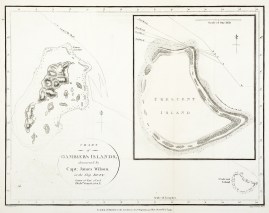
Scarce c.19th hand coloured engraved map of the Society Islands by Dumont D’Urville. From: Domeny de Rienzi M. G. L, Océanie ou Cinquième Partie du Monde. – Revue Géographique et Ethnographique de la Malaisie, de la Micronésie, de la Polynésie … Read Full Description
$A 165
Within Australia
All orders ship freewithin Australia
Rest of the World
Orders over A$300
ship free worldwide
Full Title:
Date:
Condition:
Technique:
Image Size:
Paper Size:
Genuine antique
dated:
Description:
Scarce c.19th hand coloured engraved map of the Society Islands by Dumont D’Urville.
From: Domeny de Rienzi M. G. L, Océanie ou Cinquième Partie du Monde. – Revue Géographique et Ethnographique de la Malaisie, de la Micronésie, de la Polynésie et de la Mélanésie. Paris.
References:
Ferguson, J.A. Bibliography of Australia, 2173a
Collections:
Bibliotheque Nationale de France: ark:/12148/bpt6k307862
National Library Australia: Bib ID 1386388
State Library New South Wales: DSM/980/115A7
State Library Victoria: RARELTB 919 D71O
Jules Sébastien César Dumont d'Urville (1790 - 1842)
Jules Sébastien César Dumont d'Urville (1790-1842) was a French explorer and naval officer. Dumont d’Urville sailed from Toulon on 22 April 1826, towards the Pacific Ocean in his first voyage in the Astrolabe, for a circumnavigation of the world that was to lasted nearly three years. The expedition returned to Marseille on 25 March 1829. The Astrolabe was originally named Coquille and used for Louis Isidore Duperrey's circumnavigation of the earth (1822–1825). She was renamed after the navigational instrument, the astrolabe, a precursor to the sextant. In his second voyage in the Astrolabe and the Zélée he sailed from Toulon on 7 September 1837 with the aim to reach the most southerly point possible at this time in the Weddell Sea; to pass through the Strait of Magellan; to travel up the coast of Chile in order to head for Oceania with the objective of inspecting the new British colonies in Western Australia; to sail to Hobart; and to sail to New Zealand to find opportunities for French whalers and to examine places where a penal colony might be established. After passing through the East Indies, the mission would have to round the Cape of Good Hope and returning on 6 November 1840.
Exchange rates are only indicative. All orders will be processed in Australian dollars. The actual amount charged may vary depending on the exchange rate and conversion fees applied by your credit card issuer.
Join our exclusive mailing list for first access to new acquisitions and special offers.