Arthur Levett Jackson (1834 - 1888)
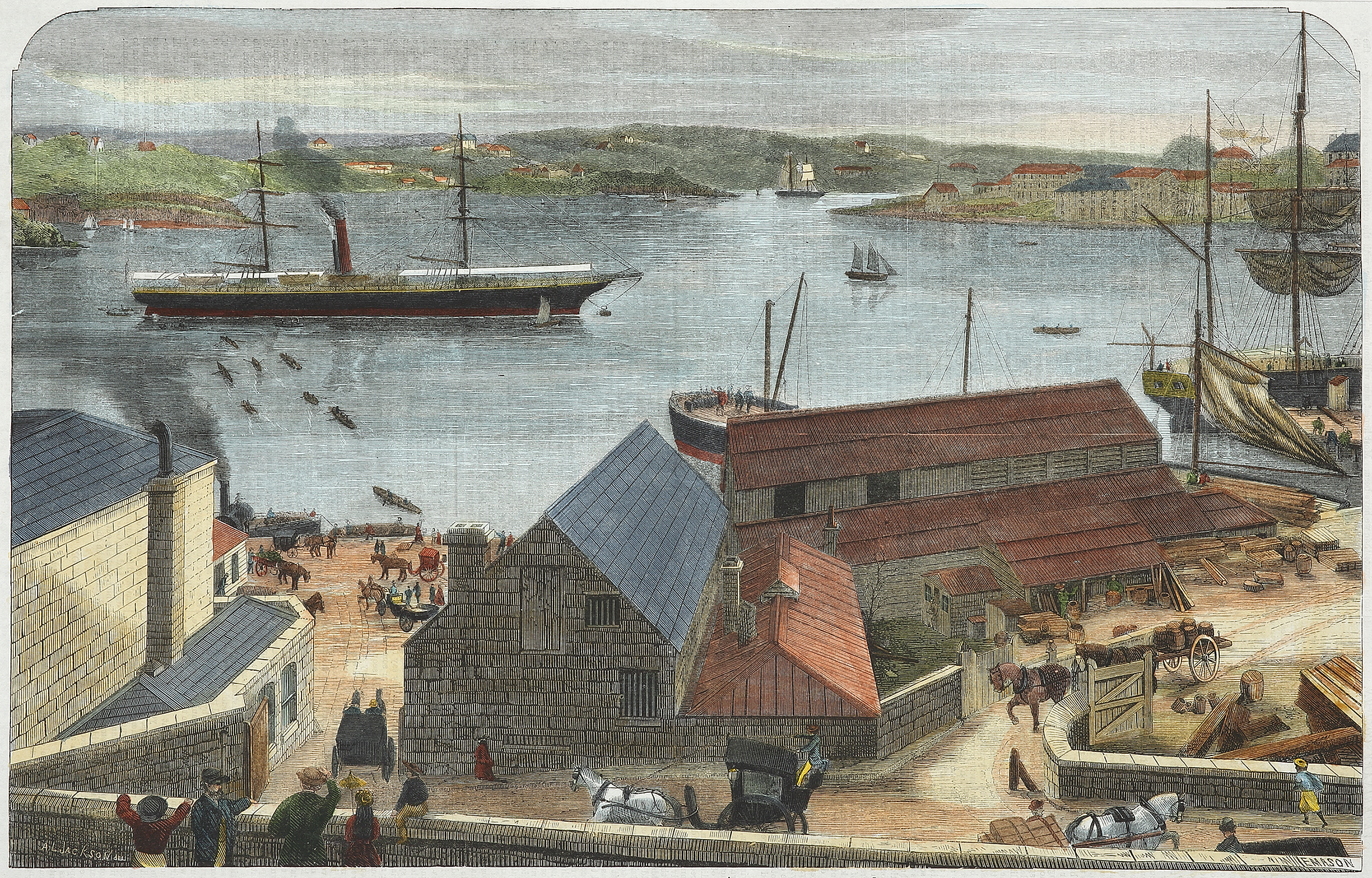
Documentary detail on Jackson’s personal life is comparatively sparse, a common situation for c.19th engravers, whose labour underpinned illustrated publishing but who rarely received the individual attention given to painters or draughtsmen. What can be reconstructed places him firmly within the skilled artisan class that supported Sydney’s expanding print culture in the mid to late Victorian period.
Born in 1834, likely in Britain, Jackson would have served a formal apprenticeship in wood engraving, a trade demanding precision, patience, and close collaboration with publishers. Training involved mastering engraving tools (burins and gravers), working on dense end-grain boxwood blocks, and learning to translate tonal wash drawings into systems of line, hatch, and stipple. Such training suggests a background in an urban craft environment rather than an academic art school.
His migration to New South Wales probably occurred during the great waves of skilled British emigration to Australia in the 1850s–60s, when the colonial press was expanding rapidly.
View other items by Arthur Levett Jackson
Walter George Mason (1820 - 1866)
Mason was born in London, the second son of Abraham John Mason, a well-known wood engraver and lecturer. Walter’s father began teaching him the art of wood-engraving when the family lived in New York in the 1830’s. Walter was sent back to London to train under Mr G. Bonner before 1839. In England, Walter Mason became very well known as a wood engraver and worked with The Illustrated London News, Punch, Pictorial Times, The Art Journal,and other periodicals.
Walter’s brothers, George and Charles, had immigrated to Australia in about 1850 and worked in Sydney as wood engravers.It seems likely that they encouraged Walter to join them. In 1852 Walter and his family left England for Australia, arriving in Sydney via the Windsor on 4 November 1852. Soon after his arrival in Sydney, Mason became involved in the founding of The Illustrated Sydney News.Despite a small permanent staff and the fact that 4000 copies of the first issue were sold at sixpence a copy, the paper had financial problems from the beginning. Over a few months in 1854, five of the original proprietors left the partnership and Walter Mason became printer and publisher.
Despite engraving illustrations for a large number of newspapers, books and magazines, Walter was in financial difficulties for most of his time in Sydney.
View other items by Walter George Mason