C1822

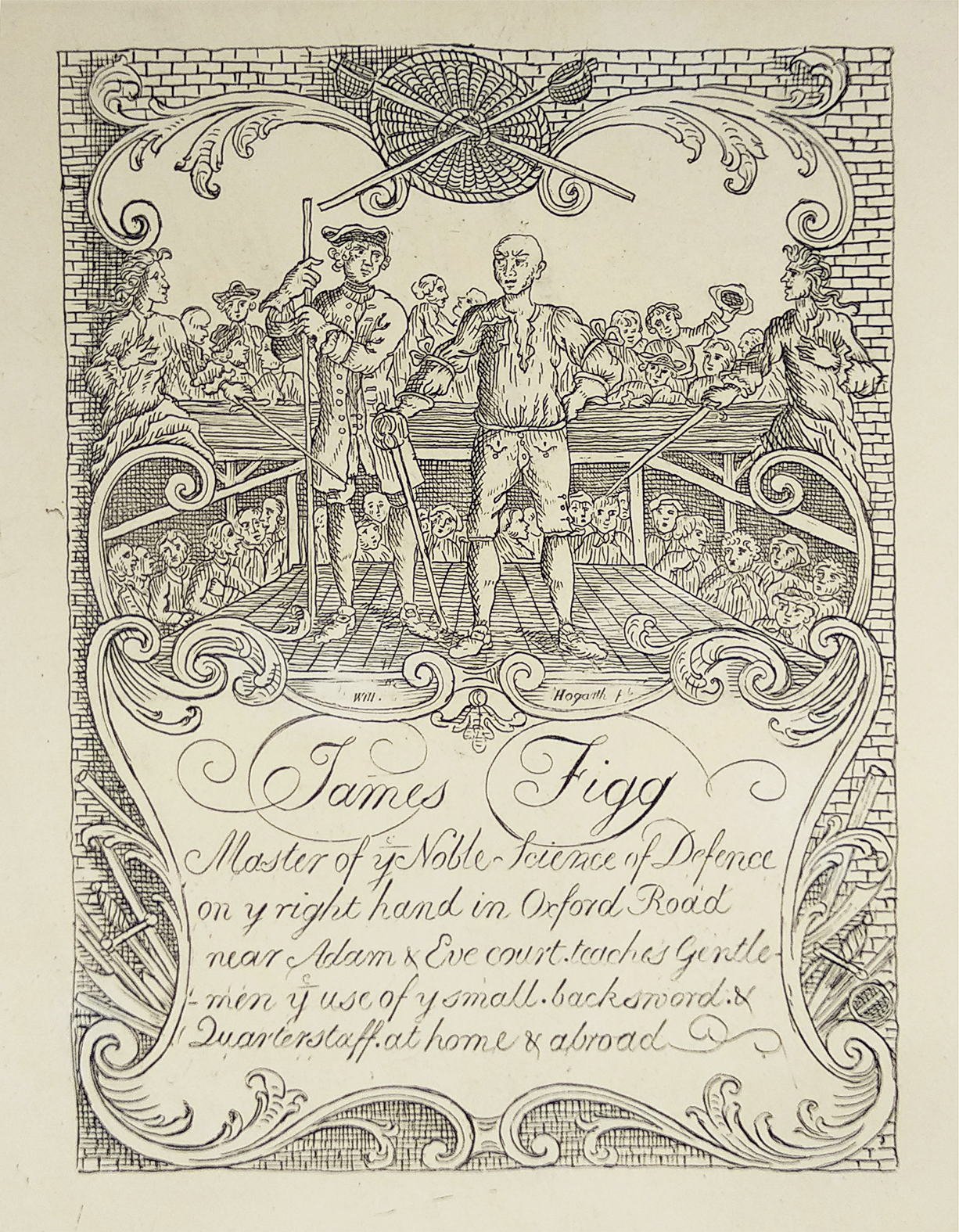
James Figg

Scarce c.19th engraving by William Hogarth (1697-174) of James Figg 1695-1734 the British bare-knuckle boxer. In 1719 he became the first English bare-knuckle champion, and held the title for 11 years. He was also a great fencer. From Hogarth, William. The … Read Full Description

Sold

S/N: HOGA-108–222985
(LF25)
Free Shipping
1.Anellobia Lunulata. Lunulated Wattle-bird. 2.Ane… Australian

Within Australia

All orders ship freewithin Australia

1.Anellobia Lunulata. Lunulated Wattle-bird. 2.Ane… Australian

Rest of the World

Orders over A$300
ship free worldwide

See Shipping page for Terms & Conditions

Details

Full Title:

James Figg

Date:

C1822

Condition:

In good condition.

Technique:

Copper engraving.

Image Size: 

123mm 
x 165mm

Paper Size: 

175mm 
x 205mm
AUTHENTICITY
James Figg - Antique Print from 1822

Genuine antique
dated:

1822

Description:

Scarce c.19th engraving by William Hogarth (1697-174) of James Figg 1695-1734 the British bare-knuckle boxer. In 1719 he became the first English bare-knuckle champion, and held the title for 11 years. He was also a great fencer.

From Hogarth, William. The Works of William Hogarth From the Original Plates Restored by James Heath. With the Addition of Many Subjects Not Before Collected to which are Prefixed a Biographical Essay on the Genius and Productions of Hogarth and Explanations of the Subjects of the Plates by John Nichols. Published by Baldwin, Cradock, and Joy., London, 1822

References:
Haslam, F. From Hogarth to Rowlandson. Liverpool 1996 :.
Paulson, R. Hogarth’s Graphic Works. London 1989 :.

Collections:
University Library Melbourne: record=b1500251
State Library New South Wales: 74VvBAye3BvO
National Library Australia: Bib ID: 6575364
British Museum London: 1937,0302.1
University of Adelaide: 76 H715

William Hogarth (1697 - 1794)

Hogarth was born in London, the son of an unsuccessful schoolmaster and writer from Westmoreland. After apprenticeship to a goldsmith, he began to produce his own engraved designs from 1710. He later took up oil painting, starting with small portrait groups called conversation pieces. He went on to create a series of paintings satirising contemporary customs, but based on earlier Italian prints, of which the first was ‘The Harlot’s Progress’ (1731), and perhaps the most famous ‘The Rake’s Progress’. His engravings were so plagiarised that he lobbied for the Copyright Act of 1735 as protection for writers and artists.

View other items by William Hogarth

Related Products

Choose currency

Exchange rates are only indicative. All orders will be processed in Australian dollars. The actual amount charged may vary depending on the exchange rate and conversion fees applied by your credit card issuer.

Account Login

The List

Join our exclusive mailing list for first access to new acquisitions and special offers.