Pancrace Bessa (1772 - 1835)
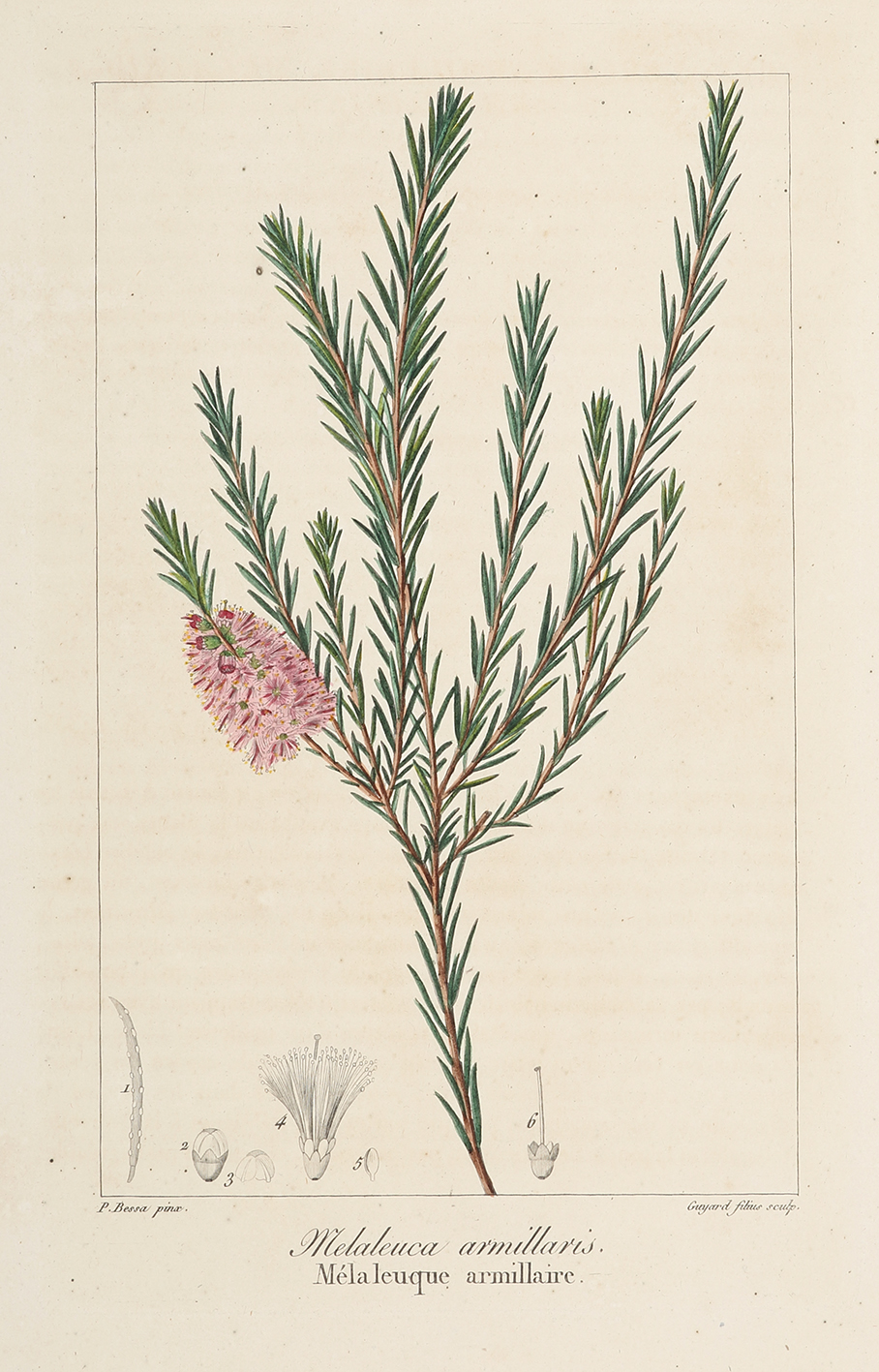
Pancrace Bessa (1772–1835) studied at the Muséum National d’Histoire Naturelle in Paris (commonly known as the Jardin des Plantes) where he came under the artistic influence of the master botanical artist and chair of iconography Gerard van Spaendonck (1746–1822) and the famous flower painter Pierre-Joseph Redouté (1759–1840)—with whom it is thought he directly studied. Bessa was hired as a peintre des fleurs to portray rare plants for the famous collection of vélins—the paintings on vellum begun in the mid-17th century for Gaston d’Orleans, inherited by Louis XIV and transferred to the Jardin du Roi—that was nationalized and renamed the Muséum National d’Histoire Naturelle in 1793. The Muséum was an internationally recognized center for research in the natural sciences with a staff of the leading French botanists and artists and a strong relationship with the Académie Royale des Sciences in Paris.
Through the connections he made at the Muséum, Pancrace Bessa illustrated some of the most important botanical publications by the leading French botanists, horticulturists and agriculturists of the day, portraying new species of fruits, flowers and trees from the Americas, Africa, Asia and Australia. For some works he was the sole illustrator, and for others he collaborated with talented artists of the day, such as his teacher Pierre-Joseph Redouté. Many of Bessa’s original paintings were reproduced using the technique of stipple engraving.
View other items by Pancrace Bessa





![Schlingpflanzen. [Climbing plants] - Antique Print from 1885](https://antiqueprintmaproom.com/wp-content/uploads/2021/08/FM_20210823_140902_-270x213.jpg "Schlingpflanzen. [Climbing plants] Australian - General")