William Hardy Wilson (1881 - 1951)
Hardy Wilson, architect, was the second of four surviving sons of William Joshua Wilson, agent, and his wife Jessie Elizabeth. Living with his parents at Burwood, Wilson attended Newington College (1893-98) and passed the junior public examination. From 1899 to 1904 he was articled to Harry Kent of Kent and Budden, architects, and attended Sydney Technical College at night. He qualified in 1904 and was president of the Architectural Students' Society.
Wilson designed mainly homes and small commercial buildings. Having been impressed by the Colonial Revival style in the US, he sought to do something similar in Australia. He is regarded as a key practitioner of the Inter-War Georgian Revival style
Regarded as one of the great Australian architects.
William Hardy Wilson was born at Campbelltown, in 1881, the great grandson of early NSW colonist Caleb Wilson. He attended Newington College, where he captained the First XV Rugby team and was awarded the School Drawing Prize. He went on to study at the Sydney Technical College.
After early work with architects Kent and Budden, Wilson embarked on a long period abroad in 1905 during which he developed his artistic technique. He travelled extensively in Italy and the United States, and when he returned in Sydney in 1910, he was primed to embark on his architectural career proper. Wilson completed a string of houses in Sydney over the coming years, including Merion, for artist Lionel Lindsay, in Wahroonga (1911); Eryldene, also on the upper North Shore in Gordon for the linguist, literary scholar and camelia enthusiast E.B. Waterhouse (1913); and his own house, Purulia, Wahroonga (1916).
In 1912, Wilson began a decade-long project to record the early colonial architecture of Australia, which would eventually culminate in the publication of Old Colonial Architecture in New South Wales and Tasmania in 1924.
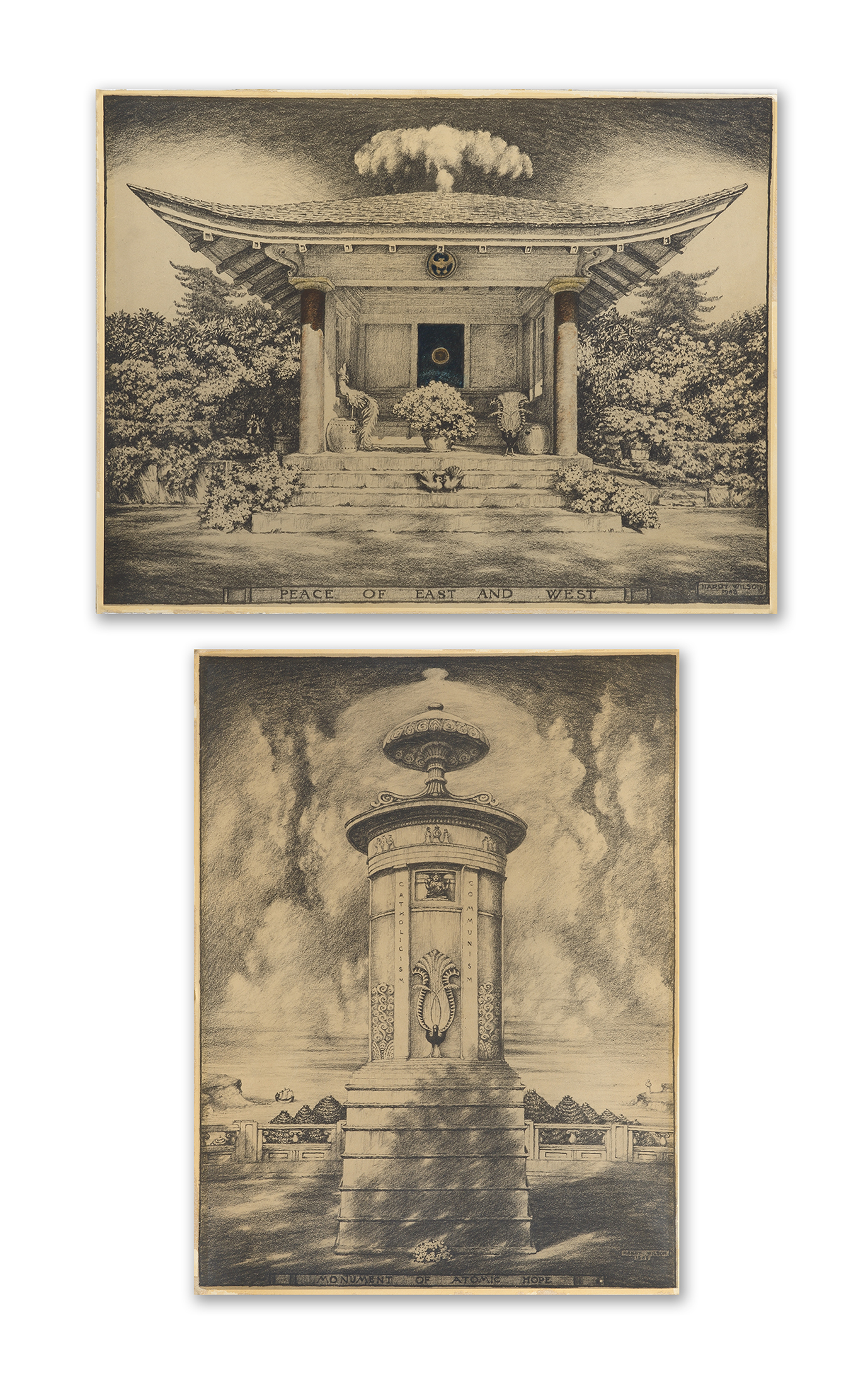
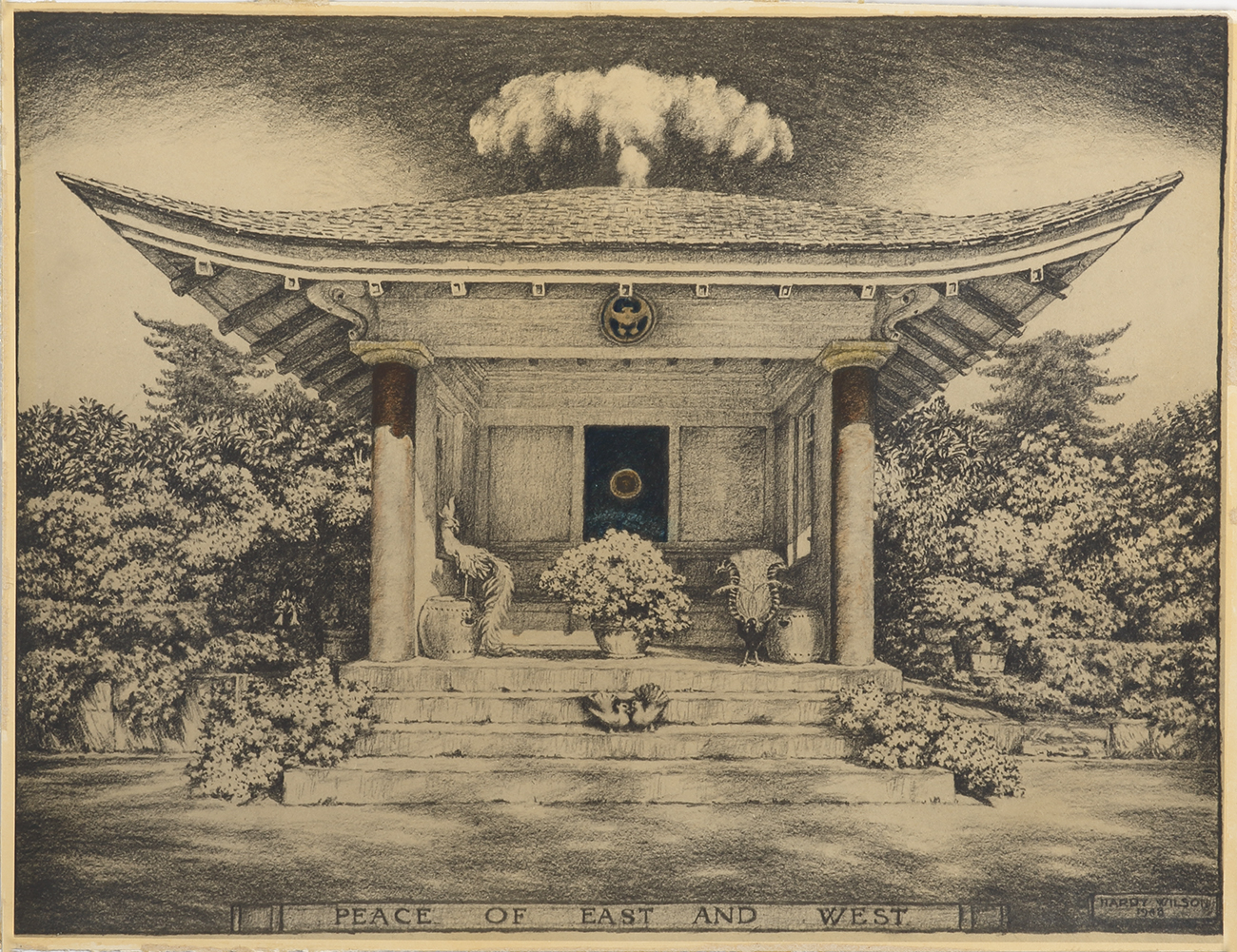
View other items by William Hardy Wilson



![[Hilda] Australian Printmakers](https://antiqueprintmaproom.com/wp-content/uploads/2021/02/MG_2417-copy-1-209x270.jpg "[Hilda] Australian Printmakers")
![Piermont Bridge sic [Pyrmont] Australian Printmakers](https://antiqueprintmaproom.com/wp-content/uploads/2020/06/mg_9183_copy_1-270x202.jpg "Piermont Bridge sic [Pyrmont] Australian Printmakers")
![[Cows on a Beach] Australian Printmakers](https://antiqueprintmaproom.com/wp-content/uploads/2023/10/MG_8727-Web-261x270.jpg "[Cows on a Beach] Australian Printmakers")