C1814
 (1888)

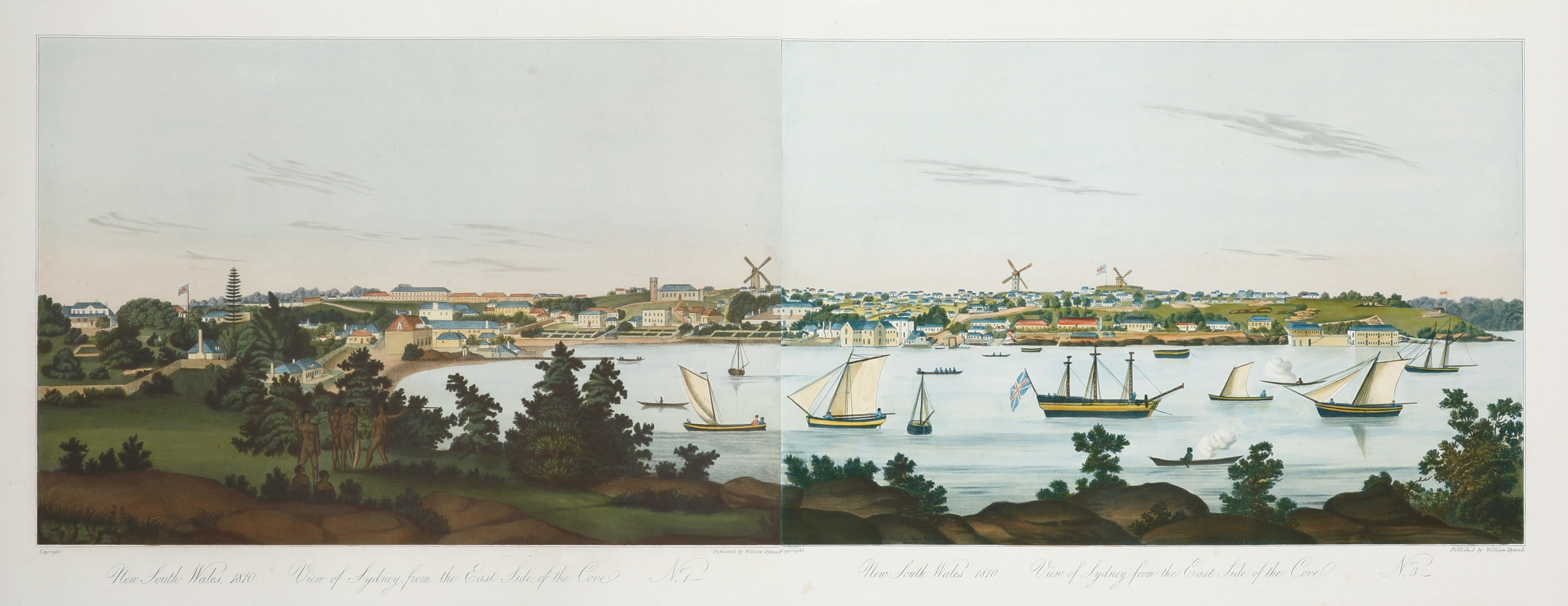
Views of Sydney Cove. East side & West side.

Pair of famous panoramas of Sydney Cove, (present day Circular Quay) by John Eyre originally issued as aquatints in 1814. They were then issued again in lithograph in 1888 by William Dymock during the celebrations of 100 years of colonial … Read Full Description

$A 4,250

In stock

S/N: NS-DYMOCK–220205
(FR)
Free Shipping
Sketches from the Mauritius – a Hindoo Relig… AFRICA

Within Australia

All orders ship freewithin Australia

Sketches from the Mauritius – a Hindoo Relig… AFRICA

Rest of the World

Orders over A$300
ship free worldwide

See Shipping page for Terms & Conditions

Details

Full Title:

Views of Sydney Cove. East side & West side.

Date:

C1814
 (1888)

Engraver:

William Dymock 

Condition:

Two sheets joined, laid on archival linen.

Technique:

Hand coloured lithograph.

Image Size: 

990mm 
x 335mm

Frame Size: 

1300mm 
x 690mm
AUTHENTICITY
Views of Sydney Cove. East side & West side. - Antique View from 1814

Genuine antique
dated:

1888

Description:

Pair of famous panoramas of Sydney Cove, (present day Circular Quay) by John Eyre originally issued as aquatints in 1814. They were then issued again in lithograph in 1888 by William Dymock during the celebrations of 100 years of colonial settlement.

The views depicts Sydney in its infancy in excellent detail.


John Eyre (1771 - )

Pardoned convict, was an early Australian painter and engraver, born in Coventry, Warwickshire in England. Aged 13 years in 1794, he was apprenticed to his father, a wool-comber and weaver, and became a Coventry freeman in August 1792. On 23 March 1799 he was sentenced to transportation for seven years for housebreaking, and reached Sydney in the transport Canada in December 1801. Granted a conditional pardon on 4 June 1804, Eyre's early drawings are dated from around this time. He generally focused on urban landscapes, giving his creative output value as both works of art and historical records. Over the course of Eyre's artistic career, his work progressed from purely representative topographical depictions, to more artistic compositions with embellishments such as Aboriginal figures and ships at sea. This progression is typical of the developmental pattern of landscape depiction in the early colonial period. He left the Colony as a free man in 1812; nothing is known of his later life.

View other items by John Eyre

Related Products

Choose currency

Exchange rates are only indicative. All orders will be processed in Australian dollars. The actual amount charged may vary depending on the exchange rate and conversion fees applied by your credit card issuer.

Account Login

The List

Join our exclusive mailing list for first access to new acquisitions and special offers.