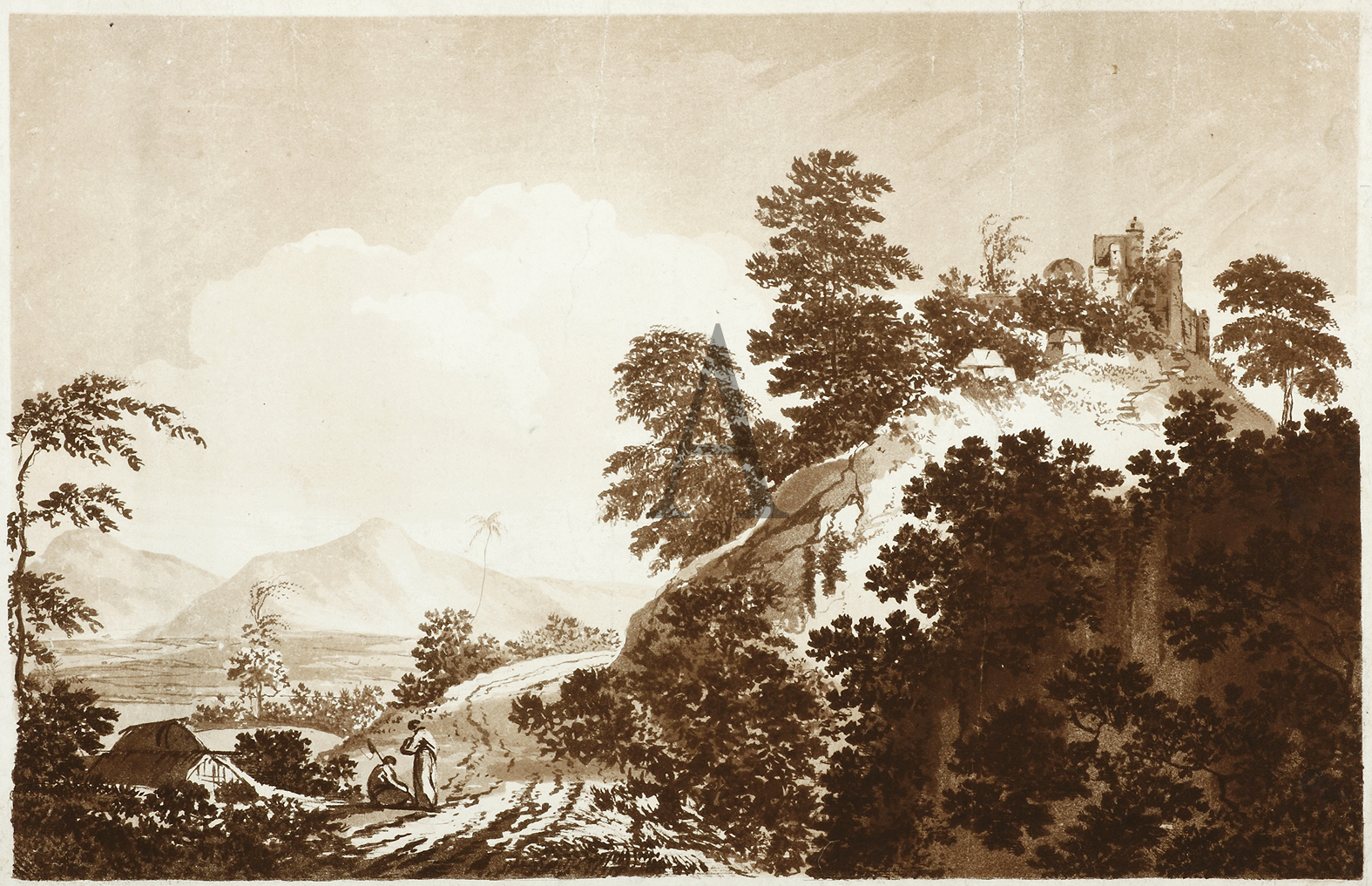
Rare c.18th aquatint by William Hodges (1744-1797) of Sakrigali which is situated on the Ganges and lies at the base of the Rajmahal Hills. The top of the first promontory, which forms the boundary between Bengal and Bihar, is known … Read Full Description
Rare c.18th aquatint by William Hodges (1744-1797) of Sakrigali which is situated on the Ganges and lies at the base of the Rajmahal Hills. The top of the first promontory, which forms the boundary between Bengal and Bihar, is known as the Pass of Sakrigali.
From: William Hodges, Select Views in India, drawn on the Spot, in the years 1780, 1781, 1782, and 1783, and executed in Aqua Tinta
References:
Abbey, J.R. Travel in Aquatint and Lithography 1770-1860. London 1972: 416.
Archer, M. Early Views of India. The Picturesque Journeys of Thomas and William Daniell, 1786-1794. Lonon & New York 1980: pp. 97-100, ill. p. 99.
Godrej, P. & Rohatgi, P., Scenic Splendours : India through the Printed Image. 1989 London: p. 44, fig. 16,17.
Collections:
Royal Academy: 03/2612
British Museum London: 1917,1208.14.1-49
Met Museum New York: 66.631.3
Royal Collection Trust UK: RCIN 1070250
William Hodges (1744 - 1797)
William Hodges was born in London, the only son of Ann and Charles Hodges, a blacksmith of St. James's Market London. They encouraged their son's talent for drawing and placed him in William Shipley's drawing school at Castle Court in the Strand. Joining Richard Wilson as an apprentice in 1758, he was required to assist his master 'in dead colouring and the forwarding of pictures'. A short period of study under Wilson and Cipriani at the Duke of Richmond's Gallery developed his style for classical composition. He was appointed artist on the Resolution and left Plymouth on 13 July 1772 and returned on 29 July 1775.
Exchange rates are only indicative. All orders will be processed in Australian dollars. The actual amount charged may vary depending on the exchange rate and conversion fees applied by your credit card issuer.
Account Login
The List
Join our exclusive mailing list for first access to new acquisitions and special offers.