Showing 49–96 of 164 results
-

1801
A New and Accurate Chart of the World According to Mercators Projections
$A 1,450 Add to cart -
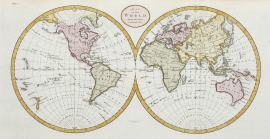
1802
Map of the World from the Best Authorities.
$A 375 Add to cart -
![[Proof Maps / World / Asia]](https://antiqueprintmaproom.com/wp-content/uploads/2024/07/MG_9552web-270x233.jpg "[Proof Maps / World / Asia] WORLD")
1803
[Proof Maps / World / Asia]
$A 4,000 Add to cart -
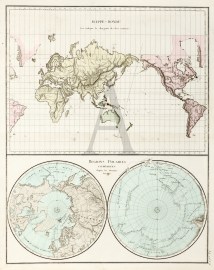
1804
Mappe-monde pour indiquer la charpente des deux continents; Regions polaires comparees d’apres les derniers voyages.
$A 650 Add to cart -
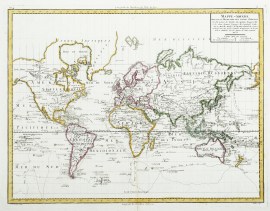
1804
Mappe-monde suivant la projection des cartes reduites, ou l’on a trace les routes de Mr. de Bougainville, et les deux derniere voyages du Capitaine Cook
$A 525 Add to cart -

1806
Mappe-Monde par le S.Robert de Vaugondy Geographe. Corrigee et Augmentee des Nouvelle Decouvertes…
$A 1,250 Add to cart -

1806
Mappe-Monde ou Carte Generale de toutes les parties connues de la Surface du Globe, Corrigee et augemtee des Decouvertes du Cap Cook, de celles de la Perouse en 1801, de Vancouver, de Mackenzie en 1802….
$A 395 Add to cart -

1806
Mappamondo o Carta Generale della Terra
$A 575 Add to cart -

1807
The World on Mercators Projection.
$A 895 Add to cart -
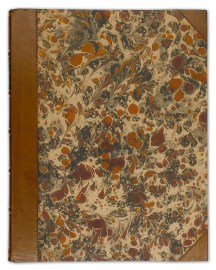
1808
Atlas- Smith (Charles) Smith’s New General Atlas, containing distinct maps of all the Principal Empires, Kingdoms, & States throughout the World carefully delineated from the best Authorities extant.
$A 4,500 Add to cart -

1810
Planisphere ou Carte Generale du Globe par J.B. Poirson Ingenieur Geographe l’An 1810.
$A 875 Add to cart -

1812
La Mappe-Monde ou le Globe Terrestre Represente en deux Hemispheres, l’un Oriental, l’autre Occidental, ou sont marquees Les Decouvertes les plus recentes Faites par Mackenzie, Vancouver, La Perouse, Bruce, Renell, Humboldt..
$A 2,750 Add to cart -

1817
Hydrographical Chart of the World on Wright of Mercators Projection with Tracts of the Last Circumnavigators.
$A 950 Add to cart -
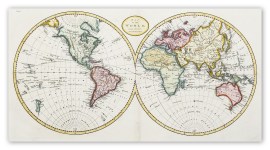
1818
Map of the World, from the best Authorities.
$A 375 Add to cart -
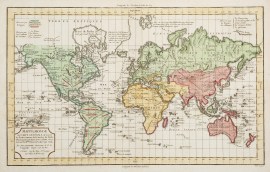
1819
Mappe-Monde ou Carte Generale de toutes les parties connues de la Surface du Globe, ……….
$A 425 Add to cart -
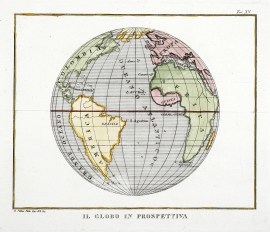
1820
Il Globo in Prospettiva
$A 145 Add to cart -
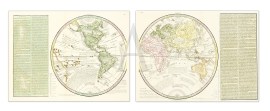
1826
Mappa Mondo
$A 750 Add to cart -

1827
The World.
$A 375 Add to cart -

1832
A Comparative View of the Chief Rivers..
$A 50 Add to cart -

1832
The World
$A 195 Add to cart -
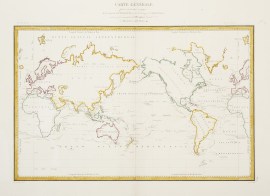
1833
Carte generale pour servir au voyage de la fregate la Thetis et de la corvette l’Esperance execute en 1824, 1825 & 1826 sous les ordres de Mr. le Baron de Bougainville Capitaine de vaisseau
$A 650 Add to cart -

1834
Carte générale du voyage pittoresque autour du monde : sur laquelle l’Océanie a été reduite d’après la carte de Mr. d’Urville & sous sa direction / gravé par Ambroise Tardieu
$A 795 Add to cart -

1834
Orbis Veteribus Notus, Auctore J. Arrowsmith.
$A 525 Add to cart -
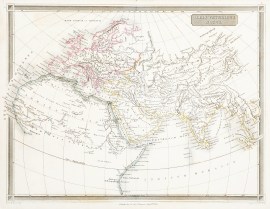
1835
Orbis Veteribus Notus.
$A 135 Add to cart -

1839
Verbreitungsbezirke Der Wichtigsten Kulturgewachse.
$A 115 Add to cart -

1841
The World on Mercator’s Projection
$A 475 Add to cart -
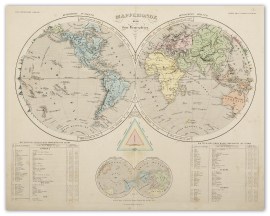
1841
Mappmonde en Deux Hemispheres
$A 325 Add to cart -

1843
Mappe Monde suv La Projection de Mercator
$A 525 Add to cart -
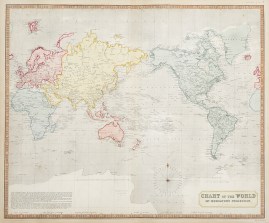
1843
Chart of the World on Mercator’s Projection.
$A 750 Add to cart -

1845
The World as known to the Ancients
$A 250 Add to cart -
1845
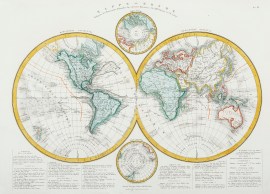
Mappe-Monde Indiquant les Possessions Coloniales des Diverses Puissances.
$A 425 Add to cart -

1846
The World on Mercator’s Projection
$A 450 Add to cart -

1850
Meteorological Map of the World Showing the Distribution of the Temperature of the Air.
$A 145 Add to cart -

1850
Hyetographic Map Showing the Distribution of the Rain over the Globe.
$A 145 Add to cart -
1850
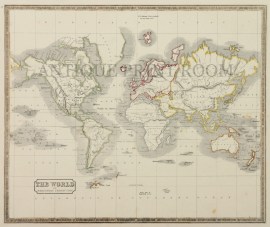
The World on Mercator’s Projection
$A 195 Add to cart -

1850
Zoological Map Showing the Distribution of the Principal Birds and Reptiles (Aves et Reptilia) Over the Globe.
$A 110 Add to cart -
1850
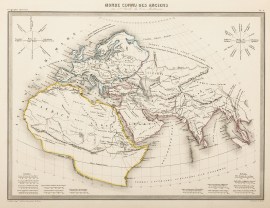
Mondu connu des Anciens
$A 125 Add to cart -

1850
Hydrographical Map of the World Showing the Currents, Temperature etc. of the Ocean.
$A 145 Add to cart -
1851
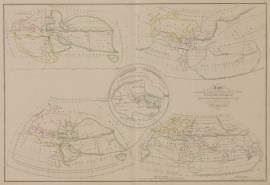
Carte de la Geographie Primitive des Greces d’apres Homere et Hesiode…
$A 195 Add to cart -

1853
Hyetographische Karte der Erde
$A 100 Add to cart -

1854
British Empire Throughout the World Exhibited in One View.
$A 1,850 Add to cart -

1856
Distribution of heat over the globe.
$A 195 Add to cart -

1856
Hyetographic or rain map of the World, with a special map of the temperature and rain fall of India by A.K. Johnston
$A 275 Add to cart -

1856
Zoological geography. Geographical division and distribution of Reptilia, reptiles
$A 325 Add to cart -

1856
Map of the distribution of marine life, illustrated chiefly by fishes, Molluscs & Radiata; showing also the extent & limits of the Homoiozoic belts, now first laid down for Keith Johnston’s Physical atlas by Professor Edward Forbes
$A 195 Add to cart -
1858
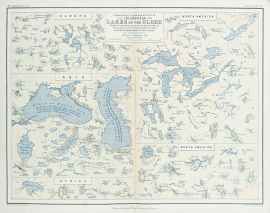
Comparative Form and Extent of the Inland Seas and Lakes of the Globe Drawn to Uniform Scale with Indications….
$A 55 Add to cart -
1858
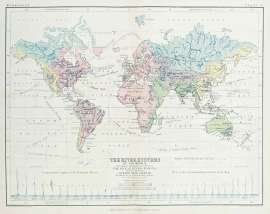
The River Systems of the World Showing the Boundaries, & Extent of the Great River Basins and the Different Oceans, Seas, Lakes, &c to which they contribute their waters.
$A 55 Add to cart -

1858
Climatological Chart, Showing by Lines & Figures the Mean Annual Temperatures of the Principal Places on the Globe.
$A 65 Add to cart
Showing 49–96 of 164 results